Get paid to train AI with no experience: what the work is and how to get accepted

Quick answer
You can get paid to train AI by rating chatbot answers, writing better ones, and checking facts, as a remote contractor. Platforms such as DataAnnotation, Outlier and Alignerr hire people without a tech background, with general work often starting around $20 an hour and specialist work paying much more. The hard part is getting in: you pass a written assessment, then wait, and work comes in waves.
Every AI chatbot you've used learned to be helpful partly from people. Somebody read two answers and picked the better one. Somebody rewrote a clumsy answer into a clear one. Somebody caught the made-up fact. AI companies need thousands of those people, and many work from home as contractors.
It's one of the best-paid ways to earn online without a specialist degree. It's also frustrating to get into, and it attracts plenty of scams. Here's what the work actually is, what it pays, where to apply, and how to pass the assessment most applicants fail.
What does training AI actually involve?
"Training AI" sounds technical. Day to day, it's mostly careful reading and writing. Common task types:
- Comparing answers. You see a question and two chatbot answers, and you decide which is better and explain why.
- Rating a single answer. Is it correct, complete, safe and well written? You score it against a set of guidelines.
- Writing ideal answers. You write the response the AI should have given.
- Writing tricky prompts. You try to find questions the AI gets wrong.
- Fact-checking. You verify claims in an answer against real sources.
- Specialist review. Coders check code, doctors check medical answers, lawyers check legal ones.
If you enjoy spotting mistakes and explaining your reasoning, you'll probably like it. If you want something mindless to do in front of the TV, this isn't it.
How much you can get paid to train AI
| Type of work | Typical rate |
|---|---|
| General rating and writing | Often around $20 an hour to start |
| Language specialists | $25 to $40 an hour at DataAnnotation |
| Coding | $40 to $150+ an hour at DataAnnotation |
| Professional fields (law, finance, medicine) | $40 to $125+ an hour at DataAnnotation |
The specialist figures are from DataAnnotation's own site. Reports from workers suggest general projects on the big platforms commonly start in the $15 to $30 range.
Be careful with the hourly rate, though. You're paid for time on tasks, and there isn't always work. Some weeks there are plenty of projects. Some weeks there are none. Treat it as flexible income, not a salary.
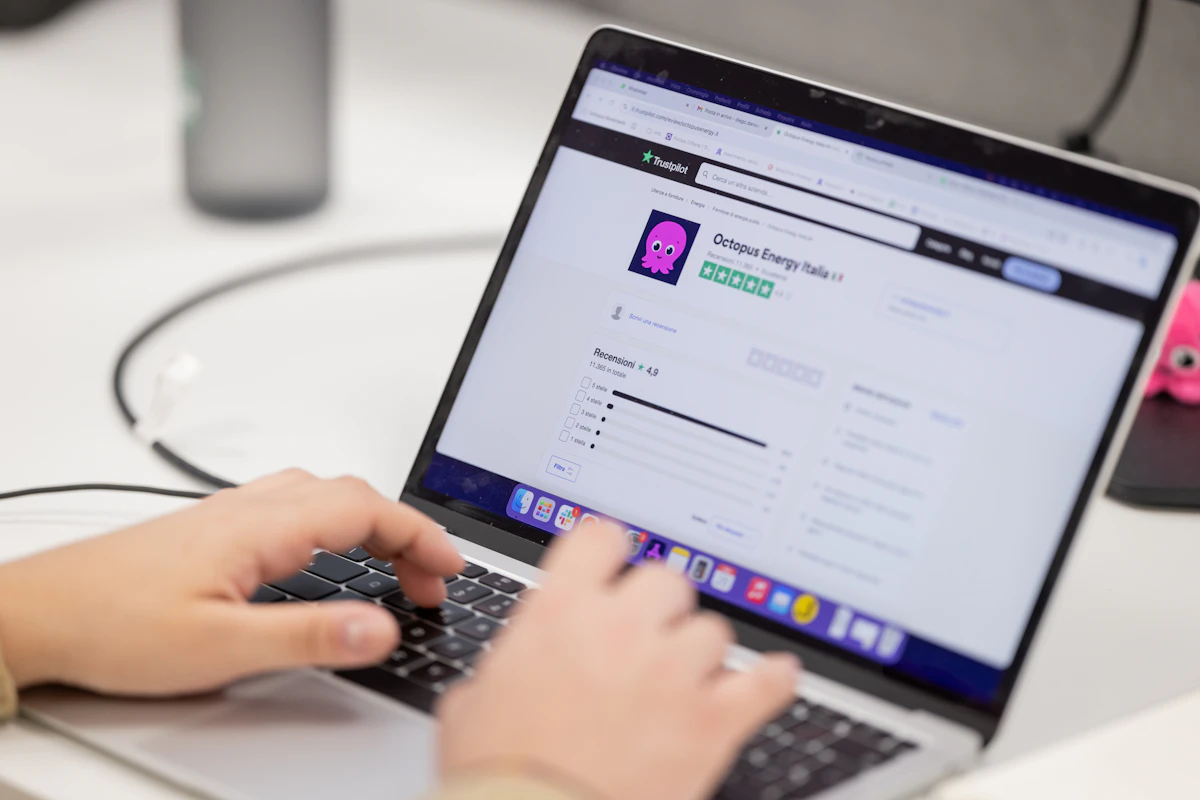
Most AI training is careful reading and clear writing, not coding. Photo by Giorgio Tomassetti on Unsplash.
What a typical session looks like
You log in and see which projects have work available. You open one, read its guidelines (sometimes 20 pages long, and they matter), and start a task. A comparison task might take 10 to 30 minutes: read the question, read both answers, check any facts, score each one against the rubric, and write a short justification. Then the next one. Many people work in one or two hour blocks, whenever it suits them, which is why it's popular with students and parents.
Where to apply
The biggest platforms open to beginners are:
- DataAnnotation. Apply, take a starter assessment, then get matched to projects.
- Outlier. Run by Scale AI, with projects across general writing and many specialist fields.
- Alignerr. Run by Labelbox, with a focus on subject-matter experts.
- Search and ad rater roles. Longer-running contracts through companies like TELUS Digital and Appen, rating search results and ads.
- Research platforms. Prolific runs studies from universities and AI labs, some of which involve rating AI output, with a minimum hourly rate.
Apply to two or three. Acceptance is unpredictable, so relying on one platform means a lot of waiting.
How to pass the AI training assessment
The assessment is where most people drop out. It's usually a set of tasks just like the real work, and graders are looking for precision, not speed.
- Take your time. There's rarely a prize for finishing fast. A careful 90 minutes beats a rushed 30.
- Read the instructions twice. Most wrong answers break a rule that was clearly stated.
- Explain your reasoning concretely. "Response B is better" isn't enough. "Response B is better because A gives the wrong date for the treaty and ignores the second half of the question" is.
- Write cleanly. Correct grammar, short paragraphs, no filler.
- Fact-check everything. Assume the AI answer contains an error until you've verified it.
- Never use an AI tool to answer. They check, and it gets you banned.
If you have real expertise (nursing, accounting, teaching, a language), say so in your profile. Specialist projects pay more and have less competition.
The downsides nobody puts in the ads
- Silence. Many platforms don't reply to rejected applicants. No news after a few weeks usually means no.
- Unsteady work. Projects start and end without warning.
- Strict quality checks. A few low-scored tasks can remove you from a project.
- Contractor status. No benefits, and you handle your own taxes.
Spot the fake AI training jobs
Because this work is in the news, scammers copy it. Real AI training platforms have you apply on their website. Fake ones find you. Warning signs:
- A recruiter messages you on WhatsApp, Telegram or by text.
- You're asked to pay for training, equipment or "account activation."
- Tasks are simple clicks ("rate these products") with huge daily pay.
- You're told to deposit money to unlock your earnings.
That last one is a task scam, which we cover in our guide to getting paid to watch videos. The FTC's page on job scams lists the other patterns. A real platform never asks you to pay.
What to do while you wait
Acceptance can take weeks. In the meantime, user testing uses similar skills (explaining clearly what works and what doesn't) and has a much faster start. We explain it in how to make money testing apps and websites. For small amounts in spare minutes, surveys and offers on a rewards site like Vazpop fill the gaps. Neither pays like AI training at its best, but both pay while the applications are pending.
Frequently asked questions
Can you really get paid to train AI with no experience?
Yes. General tasks like rating chatbot answers and writing clear responses don't need a tech background, just careful reading and good writing. Experience in a field such as law, medicine, finance or coding unlocks better-paid projects.
How much do AI training jobs pay?
General work often starts around $20 an hour. DataAnnotation lists $25 to $40 an hour for language specialists and $40 or more for coding and professional roles. Actual monthly income depends on how much work is available to you, which varies a lot.
Why haven't I heard back after the AI training assessment?
Many platforms don't send rejections, and some take weeks to review. If you've heard nothing after a month, assume you weren't accepted this time, and apply to another platform. Some let you retry later.
Can I use ChatGPT to answer AI training tasks?
No. The whole point is human judgment, and platforms check for AI-written answers. Using an AI tool is the fastest way to get removed from a project or banned from the platform.
Ready to try it yourself?
Free to join. Every payout is on a ledger you can read, so you always know where you stand.
Create a free accountKeep reading

Ways to make money
Side hustles for software engineers: 10 ways to earn without burning out
Ten ways developers earn on the side, from freelancing and micro-SaaS to AI code evaluation and bug bounties, plus the IP and moonlighting rules to check first.
Ben · Nov 1, 2026 · 3 min read

Ways to make money
How to become a UGC creator with no followers: portfolio, pricing and first clients
What UGC is, why followers don't matter, how to build a portfolio from products you own, how to price usage rights, and how to land your first brand.
Ben · Oct 31, 2026 · 3 min read

Ways to make money
Ways to make money with Amazon (without selling a single product)
Nine ways to earn from Amazon without holding inventory, from affiliate links and Kindle books to Flex deliveries and microtasks, with the key rules for each.
Ben · Oct 31, 2026 · 4 min read