How to make money taking surveys online (without wasting hours on screen-outs)

Quick answer
You can make money taking surveys online through survey panels, survey walls on rewards sites and academic research platforms. Standard surveys pay $0.50 to $3 each, which works out to about $2 to $5 an hour once screen-outs are counted. Academic studies, focus groups and a complete, honest profile are how you push that rate up.
Paid surveys are the oldest way to make money online, and still the one people try first. The idea is simple: companies want to know what you think, and they'll pay for your opinion. The reality is a bit messier. You'll get kicked out of surveys halfway through, the "up to $5" often means 40 cents, and some days there's nothing for you at all.
None of that means surveys aren't worth doing. It means they reward people who know how they work. Here's how to make money taking surveys online, what an honest hour actually earns, and the habits that separate people who give up after a week from people who quietly collect a gift card every fortnight.
Where paid surveys actually come from
Every paid survey starts with a company that needs answers: a brand testing a new ad, a supermarket planning a product, a university studying behaviour. They pay research firms to find people, and those firms reach you through a few channels.
| Source | How it works | Typical pay |
|---|---|---|
| Survey panels | You join one research company's panel and get invitations by email or app | $0.50 to $3 per survey |
| Survey walls on rewards sites | One list pulling surveys from many research firms at once | $0.30 to $3 per survey |
| Academic research platforms | Studies run by universities, often with a minimum hourly rate | Often $8+ an hour |
| Focus groups and interviews | Longer video or in-person sessions for specific people | $50 to $150 per session |
Survey walls are the easiest place to start, because one list gives you surveys from dozens of research firms. On Vazpop, the surveys page works this way, and each survey shows its reward and length before you start.
What you can really make taking surveys online
Here's the part most guides skip. You're only paid for surveys you finish, and you'll be screened out of many you start. A fairly typical hour for someone with a complete profile looks like this: four quick screen-outs (about 9 minutes, nothing earned), three completed surveys of 12 to 16 minutes each (about $3.35), and a few minutes browsing between them. That's roughly $3.40 for the hour.
That's why the realistic range on standard survey sites is about $2 to $5 an hour. Academic platforms do better: Prolific, for example, requires researchers to pay at least £6 or $8 an hour, as its participant help center explains. Nobody is getting rich from surveys, but steady use in spare minutes adds up to something real.
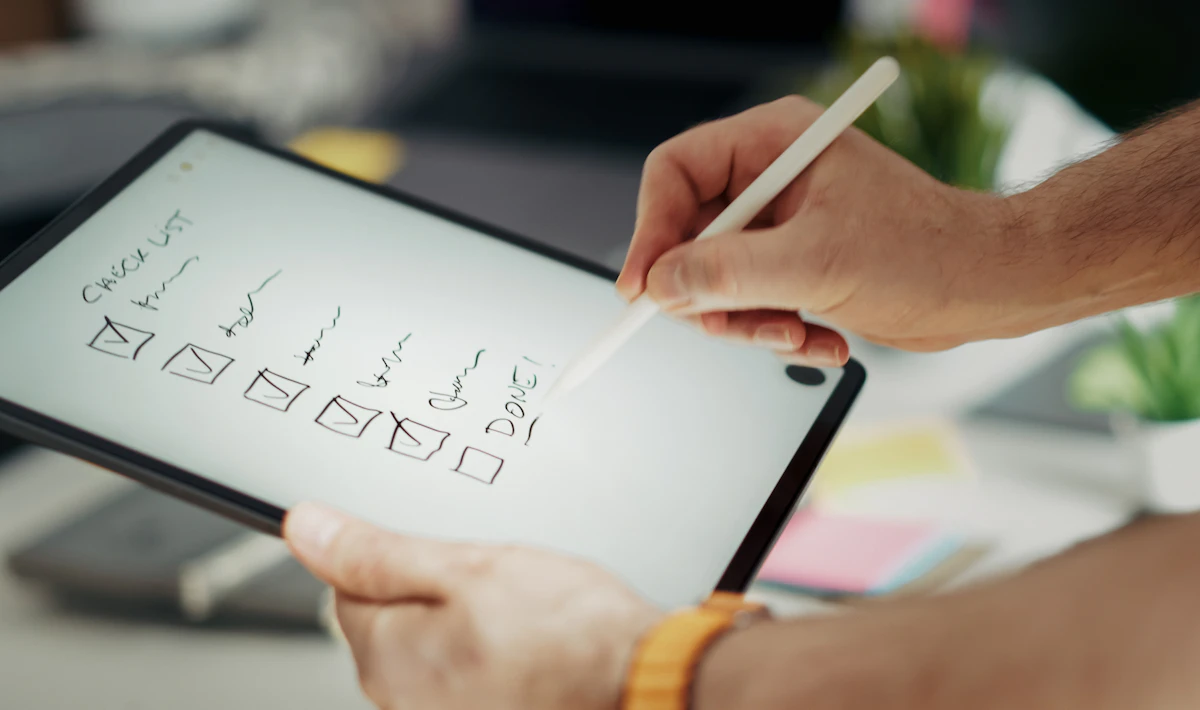
The first few questions of every survey are a checklist to see if you're who they're looking for. Photo by Jakub Żerdzicki on Unsplash.
Why you keep getting screened out
A screen-out isn't a penalty. It means the researcher didn't need your answers for that study. The usual reasons:
- You're not the target. A baby food survey doesn't want people without children.
- The quota filled. They needed 200 women aged 25 to 34, and got them five minutes ago.
- You failed a quality check. Attention questions, repeated questions and speed timers catch people clicking without reading.
- You already took it. The same study often runs on several panels, and duplicate checks stop repeats.
- Your connection looked wrong. VPNs are treated as fraud, because the researcher paid for people in a real location.
Being screened out of half the surveys you start is normal, especially at the beginning. Some survey walls pay a small amount when you're screened out late in a survey, which softens the worst ones.
How to make money taking surveys online: 6 habits that help
- Fill in every profile question honestly. Profiles route you to surveys you'll actually qualify for.
- Stay consistent. If you said you own a dog last week, you still own a dog. Inconsistent answers get flagged and rewards reversed.
- Take surveys when they appear. Fresh surveys have open quotas.
- Compare price per minute. A $1.50, 10 minute survey beats a $2, 30 minute one.
- Never lie to qualify. Researchers cross-check answers, and it gets accounts closed.
- Add one better-paid source. An academic platform or a focus group panel lifts your average more than anything else.
How and when you get paid
Most survey sites pay by PayPal or gift cards once you reach a minimum, often $5 or so. Expect a delay before survey money is withdrawable, because research companies check answer quality and can reject responses weeks later. On Vazpop, survey rewards sit in a 30 day hold for exactly that reason. It's slower, but it means the balance you see as available is money you keep.
Spot the fake surveys
Real surveys never ask for your card number, bank login or a fee. The fakes usually promise a phone or a big gift card for a few questions, then ask for "shipping" on your card. The FTC explains this pattern in its guide to fake prize scams. If you have to pay to get paid, it's not a survey.
Is it worth your time?
As a job, no. As a way to turn queues, ad breaks and bus rides into a gift card every couple of weeks, yes. If you have longer blocks of quiet time, other options pay far better per hour: testing apps and websites is the closest cousin to surveys and often pays $10 or more for 20 minutes. And if you're a student, our guide on making money online as a college student shows how surveys fit around a class schedule.
Frequently asked questions
How much can you make taking surveys online?
Most people earn about $2 to $5 an hour on standard survey sites once time lost to screen-outs is counted. Doing surveys daily in spare moments typically adds up to $20 to $80 a month. Academic studies and focus groups pay much more but are less frequent.
Why do I keep getting disqualified from surveys?
Each survey wants a specific group of people, like parents in a certain age range, and stops accepting a group once it has enough answers. Getting screened out of half the surveys you start is normal, especially in your first week. A complete profile and taking surveys soon after they appear both help.
Are paid online surveys legit?
Real survey sites are legit: research companies genuinely pay for opinions. What isn't legit is any 'survey' that promises a prize and then asks for your card details or a fee. Real surveys never ask you to pay.
Which survey sites pay the most?
Academic research platforms with a minimum hourly rate, like Prolific, usually pay the best per hour. Focus groups and professional surveys pay the most per session. Standard survey panels pay the least, but have the most surveys available.
Ready to try it yourself?
Free to join. Every payout is on a ledger you can read, so you always know where you stand.
Create a free accountKeep reading

Ways to make money
Side hustles for software engineers: 10 ways to earn without burning out
Ten ways developers earn on the side, from freelancing and micro-SaaS to AI code evaluation and bug bounties, plus the IP and moonlighting rules to check first.
Ben · Nov 1, 2026 · 3 min read

Ways to make money
How to become a UGC creator with no followers: portfolio, pricing and first clients
What UGC is, why followers don't matter, how to build a portfolio from products you own, how to price usage rights, and how to land your first brand.
Ben · Oct 31, 2026 · 3 min read

Ways to make money
Ways to make money with Amazon (without selling a single product)
Nine ways to earn from Amazon without holding inventory, from affiliate links and Kindle books to Flex deliveries and microtasks, with the key rules for each.
Ben · Oct 31, 2026 · 4 min read